

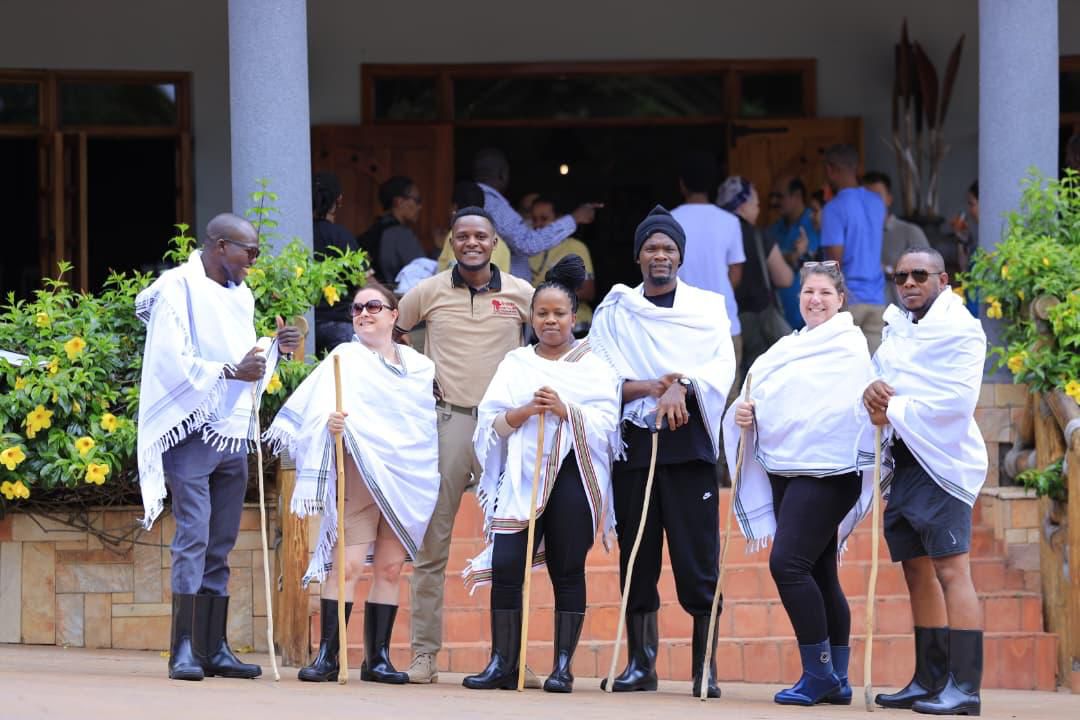
Uganda has intensified efforts to position itself as a leading regional tourism destination after the Uganda High Commission in Pretoria hosted a delegation of 10 top Destination Management Companies (DMCs) from South Africa, Namibia, Botswana, and Zimbabwe at the Pearl of Africa Tourism Expo (POATE) 2026.
The Southern African travel trade delegation participated in the expo following a familiarisation and educational tour across Uganda aimed at giving tourism operators firsthand experience of the country’s diverse tourism offerings, ranging from wildlife and culture to hospitality and adventure tourism.
The initiative forms part of Uganda’s broader strategy to expand its tourism footprint within the African market at a time when the country is increasingly prioritising intra-African travel as a key driver for tourism recovery and growth.
Speaking during engagements at POATE 2026, Uganda’s High Commissioner to South Africa, Paul Amoru, said the programme was designed to deepen tourism and business linkages between Uganda and Southern Africa.
“Our objective is to strengthen tourism partnerships between Uganda and Southern Africa by giving travel trade professionals a firsthand experience of our destination. We are confident this initiative will translate into stronger business relationships and increased visitor arrivals to Uganda,” Amoru said.
During their stay, the delegation toured several tourism circuits across the country, interacting with local operators, hospitality providers and conservation players in a move officials say is intended to help foreign travel companies confidently market Uganda to travellers within their home markets.
The delegates also participated in a series of business-to-business meetings, networking engagements and destination marketing sessions at POATE 2026, Uganda’s flagship tourism and travel trade exhibition that annually attracts international buyers, tour operators, investors and exhibitors.
Tourism officials say the engagements come at a critical time when African countries are increasingly seeking to reduce dependence on traditional overseas tourism source markets by strengthening regional travel networks and air connectivity across the continent.
Officials from the Uganda Tourism Board say Southern Africa presents a growing opportunity for Uganda’s tourism sector due to rising middle-class travel demand, increased regional connectivity and growing interest in experiential and nature-based tourism products.
Commenting on the outcomes of the engagements, tourism stakeholder Alpha Okello said the response from the Southern African delegation had been encouraging.
“The participation of the Southern African delegation at POATE 2026 demonstrates the growing interest in Uganda as a tourism destination within the region. The business engagements have been extremely productive, and we are confident that the relationships established during this programme will translate into new partnerships, increased bookings, and greater tourism exchange between Uganda and Southern Africa,” Okello said.
Members of the visiting delegation described Uganda as a destination with untapped tourism potential capable of appealing strongly to Southern African travellers seeking authentic experiences.
South African travel trade delegate Susan Harnett said the familiarisation tour had significantly reshaped their understanding of Uganda’s tourism market.
“Experiencing Uganda firsthand has exceeded our expectations. From the incredible wildlife and natural beauty to the warmth of the people and quality of tourism services, the destination offers unique experiences that will resonate strongly with travellers from our markets. POATE has also provided an excellent platform to connect directly with Ugandan operators and develop products that we can confidently take to our clients back home,” Harnett said.
Uganda’s tourism sector remains one of the country’s top foreign exchange earners and key contributors to employment, with government continuing to invest in destination marketing, conservation, infrastructure and regional partnerships as part of efforts to boost visitor arrivals and tourism revenues ahead of the country’s anticipated first oil economy transition.
